
How Positive Behaviour Support Improves Quality of Life in Supported Living
Introduction
Within contemporary social care services, Positive Behaviour Support (PBS) has evolved from being simply a method of managing behaviors to being an approach that prioritizes dignity, respect, and human rights. PBS has moved away from the use of outdated and restrictive interventions and has moved towards the more compassionate approach of questioning what the person might be attempting to communicate.
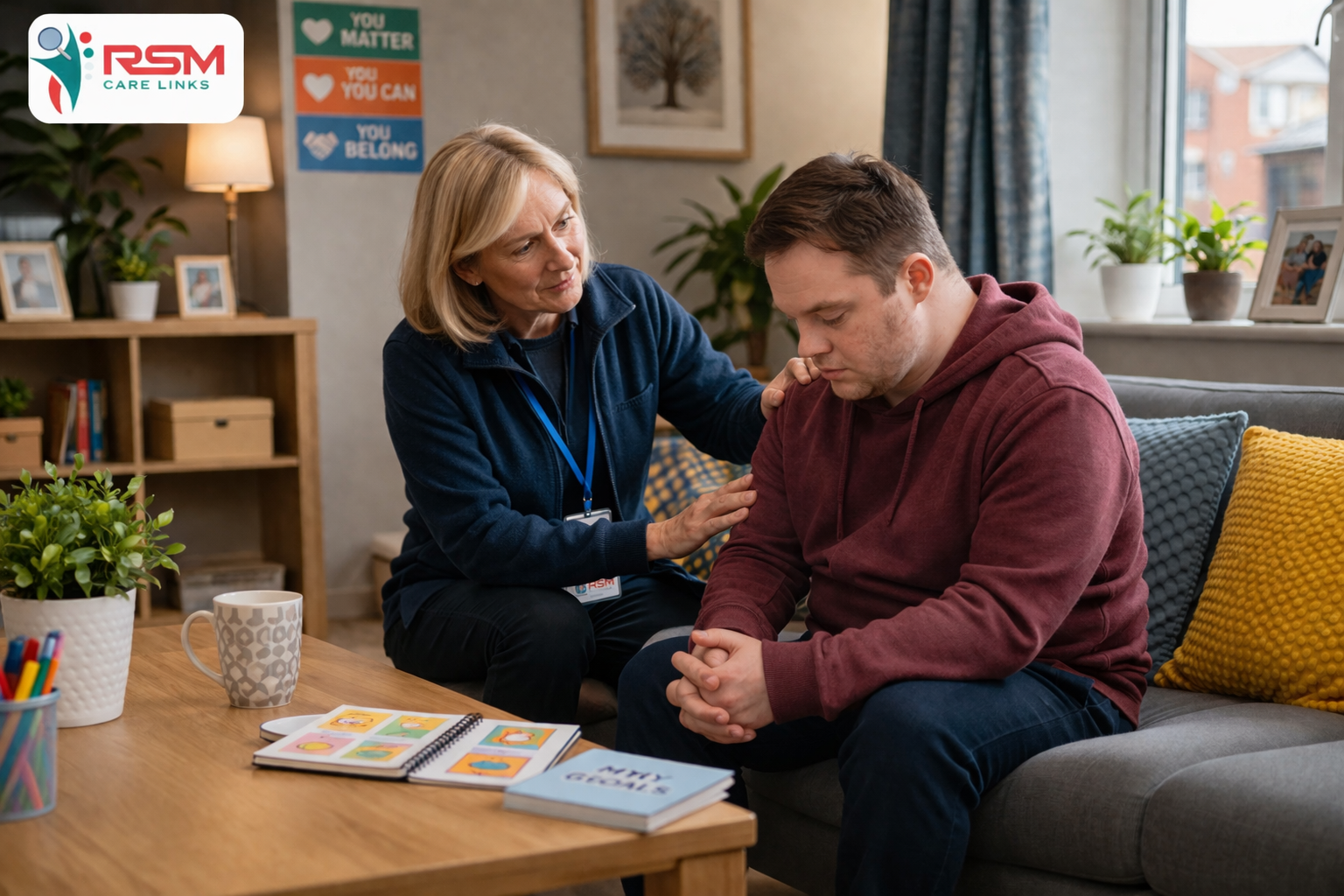
PBS has a significant role to play in the life of individuals who live in supported living. PBS helps individuals overcome anxiety, acquire life skills, and become more independent.
What is Positive Behaviour Support?
Positive Behaviour Support is a person-centered approach to understanding why behaviors may be seen as problematic or challenging. It is based on a simple but powerful philosophy:
“Every behaviour occurs for a reason, often as a means of expressing an unmet need, discomfort, or frustration.”
Rather than focusing on how to stop a behaviour, PBS works on:
- Understanding the root cause
- Changing the environment
- Teaching alternative ways to express communication
This way, change can last for a lifetime instead of just for a moment.
FBA for Behaviour Understanding
One of the greatest advantages of PBS is the scientific approach followed. Prior to designing any behavioral support plan, professionals providing home care services undertake a Functional Behavioural Assessment.
The ABC Model Explained
Antecedent: What leads to the display of the specific behavioral issue?
(e.g., loud noise, change in routine, unusual surroundings)
Behaviour: What exactly does the person with the behavioral challenge do?
(e.g., withdrawing from the situation, displaying aggression, repetitive behaviors)
Consequence: What happens as a direct outcome of the behavioral challenge?
(e.g., attention from the caregiver, escaping the situation, comfort provided)
The 3 Levels of an Effective PBS Plan
A well-structured PBS approach in supported living services places emphasis on prevention, early intervention, and safety.
1. Proactive Strategies – Building the Foundation
This involves daily activities aimed at preventing problems before they even occur.
- Making adjustments to the environment to minimize sensory overload from noise or light
- Providing predictability in daily routines by creating daily schedules
- Providing tools to help individuals communicate their needs
This helps in creating a peaceful and stable environment where the person feels comfortable.
2. Early Intervention Strategies – Recognising Warning Signs
This stage involves the early detection of possible problems and taking immediate action to avoid the situation from escalating.
- Recognising changes in the person’s behavior such as pacing or withdrawing from the situation
- Offering reassurance and emotional support to the person
- Redirecting the person’s attention or changing the situation
This helps in reducing the person’s anxiety levels and avoiding the situation from becoming overwhelming.
3. Reactive Strategies – Ensuring Safety and Dignity
This stage involves the use of strategies to ensure the person’s safety and dignity in the face of overwhelming situations.
- Protecting the person and others from possible harm
- Ensuring the dignity of the person at all times
- Using the least restrictive approach possible
These strategies are carefully designed and used only when necessary.
Why PBS is Life-Changing for Families
For families, it can be difficult to witness someone struggling. PBS provides a structured and caring solution to this, with an emphasis on positive progress and care for the individual through professional domiciliary care services.
Key Benefits
- Emotional Wellbeing
People feel understood, alleviating stress and anxiety
- Skill Development
People can learn to cope with emotions and daily activities independently
- Independence
People can become more independent from support
- Relationship Building
Trust is built between individuals, families, and care staff
5. Stability
People can benefit from consistent care approaches
Who Can Benefit from PBS?
Positive Behaviour Support is highly effective for individuals with different types of care needs, especially when services provide care at your home or within supported living environments, for example:
Autism & Learning Disability
Helps individuals with communication, emotional, and sensory difficulties
Mental Health Conditions
Assists individuals in dealing with triggers related to anxiety, distress, or behavioral reactions
Acquired Brain Injury (ABI)
Assists individuals in relearning social skills and emotional control
Dementia & Age-Related Conditions
Assists individuals in reducing agitation related to confusion or memory loss
PBS is flexible and can be applied in different types of care settings.
Creating a Supportive Environment in Supported Living
The PBS approach relies greatly on the support of the environment. The right structure can greatly minimize behavioral difficulties.
Key Elements of a Supportive Environment
- A peaceful, secure, and familiar environment
- Personalized environments
- Daily routine and structure
- Social interaction and engagement opportunities
A positive environment is beneficial for an individual’s emotional well-being and independence.
Choosing a PBS-Led Supported Living Provider
Choosing the right provider is vital to deliver an effective PBS. Families need to look for providers who emphasize quality, training, and care.
What to Look For
- Trained staff in recognized PBS models
- Regular review and update of care plans
- Good communication with families
- Dignity-first approach with minimal restrictions
A trusted provider ensures that care is not only provided safely but also in an empowering manner.
Conclusion
Positive Behaviour Support is not about changing the individual; it is about changing the way in which support is provided. By focusing on understanding the individual’s behavior, communicating with them more effectively, and building the individual’s life skills, we can create real positive change.
It transforms supported living into an environment where the individual can flourish, become independent, and live with dignity and confidence.
Take the Next Step with Expert Care
Are you looking for support with dignity and compassion with the expertise of Positive Behaviour Support? Contact RSM Care Links today. Our team of experts can offer you the support you need with our supported living services.